Who is this article for?
This is for entrepreneurs in the US, UK, and Europe who want to find a genuine, trustworthy manufacturer in China but have no idea how to tell the real ones from the fraud. You do not need to visit China. You do not need to speak Mandarin. You just need to follow a clear, repeatable verification process — which is exactly what this guide gives you.
What you will learn
- Where to actually search for manufacturers
- Manufacturer vs trading company explained
- China’s manufacturing regions by product
- A step-by-step supplier verification process
- Red flags that signal a bad supplier
- Green flags that signal a trustworthy one
- How to shortlist and approach suppliers
- What to do before sending a single dollar
Why finding the right manufacturer is the most important decision you will make
I have been working with Chinese manufacturers for over a decade. I lived in China. I speak Mandarin. I have walked through hundreds of factories across Guangdong, Zhejiang, Fujian, and beyond. And if there is one thing I have learned above everything else, it is this: your manufacturer is your business partner, whether you treat them that way or not.
The quality of your product, the reliability of your supply chain, the accuracy of your delivery timelines, the safety of your payments — all of it flows from the quality of the manufacturer you choose. Get this right and everything else becomes manageable. Get it wrong and no platform, no logistics partner, and no marketing strategy will save you.
The good news is that China has thousands of excellent, professional manufacturers who deliver quality goods on time and build strong long-term relationships with international buyers. They exist. You just need to know how to find them and how to tell them apart from the ones that will cost you.
First, understand what you are actually looking for
Before you search for a single supplier, you need to be clear on a distinction that will shape everything: the difference between a manufacturer and a trading company.
What is a manufacturer?
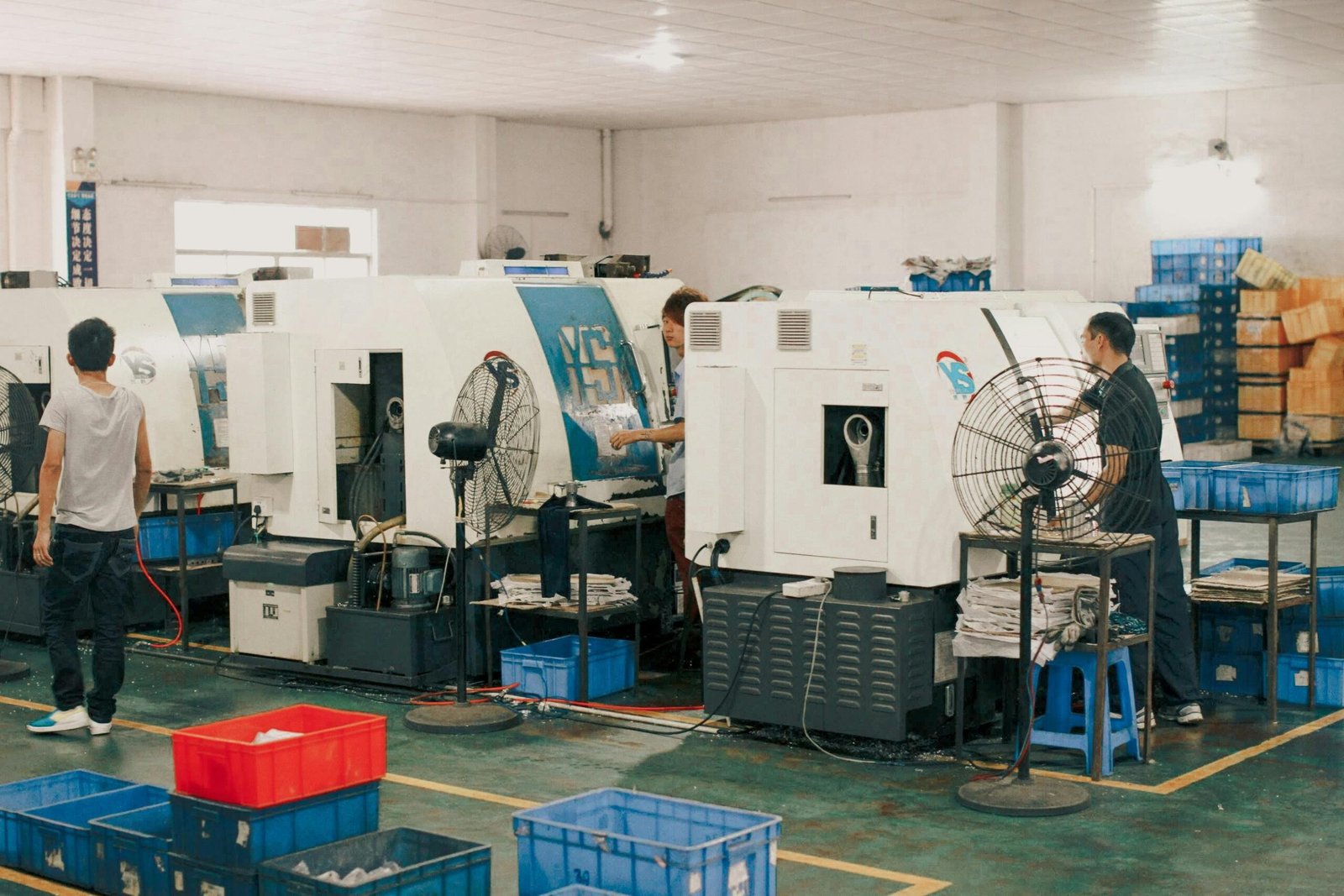
A manufacturer, sometimes called a factory, is a company that physically produces the goods. They own or operate production facilities, employ workers, manage raw material procurement, and handle the actual making of the product. When you buy from a manufacturer, you are buying from the source.
The advantages are clear: lower unit prices, direct control over production, the ability to customise the product, and a direct relationship with the people actually making what you are selling. The limitations are that manufacturers often have higher minimum order quantities, can be less flexible on small orders, and may have less polished international communication than trading companies.
What is a trading company?
A trading company is an intermediary. They do not manufacture anything themselves. Instead, they purchase from multiple factories and sell to international buyers, taking a margin in the process. They often offer a broader product range, smaller minimum orders, smoother English communication, and more flexibility — all in exchange for a higher per-unit price.
Neither is automatically the right choice. For a first-time buyer placing a small exploratory order, a trading company may offer the flexibility and communication quality you need. For a buyer placing large, branded orders, going direct to the manufacturer makes economic and strategic sense. Know what you need before you decide.
Where to search for manufacturers
There are more ways to find Chinese manufacturers than most Western buyers realise. The platforms are the obvious starting point, but they are not the only option.
Sourcing platforms
Alibaba is the most practical starting point for US and UK buyers. Search for your product category, filter by supplier type, and use the verified supplier and Trade Assurance filters to narrow down to more credible options. Read our full platform comparison guide for a deeper breakdown of how Alibaba compares to other sourcing platforms.
Global Sources is particularly strong for electronics and industrial goods. It has a rigorous supplier audit process and tends to attract more established, export-oriented manufacturers.
Made-in-China.com is a solid alternative, especially for industrial, hardware, and construction-related product categories.
Trade shows
China’s trade shows are where serious buyers and manufacturers meet face to face. The Canton Fair, held twice a year in Guangzhou, is the largest import and export fair in the world. The Global Sources Summit in Hong Kong is another significant event. If you are committed to building a supply chain from China and you have the budget to travel, attending one of these shows gives you access to thousands of verified manufacturers in a single location and the ability to inspect products, meet factory representatives, and establish relationships in person.
Google and direct outreach
Many professional Chinese manufacturers have their own export-facing websites and can be found through targeted Google searches. Searching for terms like “China [product] manufacturer” or “[product] factory China export” can surface companies that do not heavily advertise on Alibaba but have strong export experience. Once you find them, you can approach them directly via email.
Referrals from trusted networks
If you know other importers in your industry or community who have sourced from China successfully, their supplier recommendations are some of the most valuable leads you can get. A warm referral from a buyer who has already done business with a factory tells you more than any platform verification badge.
China’s manufacturing regions by product type
China’s manufacturing industry is highly regionalised. Different provinces and cities specialise in different product categories. Knowing where your product is made gives you a geographic anchor for your search and helps you identify whether a supplier’s claimed location matches their product type.
Home to Shenzhen and Guangzhou. The heart of China’s electronics manufacturing and one of the most export-active provinces in the country. Also strong in clothing, toys, and consumer goods.
Home to Yiwu, the world’s largest small commodities market. Zhejiang is known for hardware, garments, accessories, and a vast range of everyday consumer products.
A major hub for footwear manufacturing, sporting equipment, and stone products. Many global footwear brands source from Fujian factories.
Strong in higher-value industrial manufacturing, machinery, and technology products. More often the source for buyers in technical and B2B product categories.
Major producer of agricultural products, tyres, construction materials, and heavy equipment. An important sourcing region for buyers in those specific categories.
One of China’s largest steel producing regions. Also significant for textiles and glass manufacturing. Relevant for buyers in construction and materials categories.
Why this matters: If a supplier claims to manufacture electronics but their listed address is in a province known for agricultural goods, that is a signal worth investigating. Legitimate manufacturers are almost always located in the region that specialises in their product category.
How to verify a Chinese manufacturer step by step
Do not skip any of these steps. Each one eliminates a layer of risk.
Request the business licence
Every legitimate registered Chinese company has a business licence. Ask for it directly and early in the conversation. It should show the company’s registered name, registration number, registered address, and business scope. Cross-reference the name on the licence with what they have told you. If they hesitate, make excuses, or refuse, stop the conversation immediately.
Verify the company on China’s national business registry
China’s National Enterprise Credit Information Publicity System (NECIPS) is a government database where any registered company can be looked up using their business registration number. This is a free, public tool that confirms whether the company exists as registered, what its legal status is, and who the registered directors are. A sourcing agent or someone who reads Chinese can do this check in minutes.
Request a live video call or factory walkthrough video
Ask to see the factory. Not photographs — a live video call or a real-time walkthrough of the production floor. You want to see machines running, workers present, inventory on the floor. A legitimate manufacturer will accommodate this without hesitation. A trading company pretending to be a factory, or a fraudulent listing, will find reasons to avoid it.
Check their export history
Ask how long they have been exporting, which markets they currently supply, and if they can provide references from existing international clients. Established manufacturers will have buyers in the US, UK, Europe, or other export markets they can point you to. Follow up on at least one of these references with a direct message or email.
Request relevant certifications
If your product requires certifications to be legally sold in your market, the supplier should be able to provide documentation. CE marking for the UK and EU, FCC certification for electronics in the US, FDA compliance for food contact or health products — ask for these documents and verify they are current. Certifications can be faked, so for high-stakes orders, third-party verification is worth the cost.
Assess their communication quality
The way a supplier communicates before you place an order tells you a great deal about what working with them will be like after your money is in their account. Are their responses clear, specific, and timely? Do they answer your questions directly or deflect? Do they ask their own questions about your requirements, showing genuine interest in doing the job well? Quality suppliers behave professionally from the first message.
Use a third-party inspection company
For any significant order, hire a third-party inspection company to conduct a pre-shipment inspection at the factory before your goods are loaded. Companies like SGS, Bureau Veritas, and Intertek operate throughout China and can verify that your goods match the agreed specifications before they leave the country. This is your last line of defence against quality failures.
Red flags and green flags
After years of working with Chinese manufacturers across dozens of product categories, certain signals consistently separate the trustworthy suppliers from the problematic ones. Here is what to watch for.
Red flags — walk away
- Refuses or delays providing a business licence when asked directly
- Will not do a video call or show the factory on camera
- Asks for 100 percent payment upfront before any sample or contract
- Requests payment to a personal bank account rather than a company account
- Prices are dramatically lower than every other supplier for the same product
- Vague or evasive answers to specific questions about production capacity and lead times
- Listed address does not match the product category or manufacturing region
- Cannot provide certifications that they claim to hold
- Pushes urgency aggressively — limited time offers, pressure to pay quickly
- Newly registered company with no transaction history or reviews
Green flags — good signs
- Business licence provided promptly and details match what they have told you
- Video call or factory walkthrough arranged quickly with no resistance
- Has a verifiable track record of exporting to international markets
- Asks detailed questions about your product specifications and requirements
- Provides clear, specific answers about production capacity, lead times and MOQ
- Certifications available and current for your target market
- Positive reviews or references from buyers in similar markets to yours
- Proposes using Alibaba Trade Assurance or another protected payment method
- Professional and timely communication across multiple exchanges
- Has been exporting for several years with consistent transaction history
How to approach suppliers the right way
The way you first contact a manufacturer matters more than most Western buyers realise. Chinese suppliers receive dozens or hundreds of enquiries every day. A generic, one-line message asking for a price list will either be ignored or receive a generic, automated response.
A well-crafted first message signals to the supplier that you are a serious buyer worth their time. It should include:
- A brief introduction to your company and your market
- A clear description of the product you need, including specifications
- Your approximate target order quantity for the first order and ongoing
- A specific question about their capacity to supply what you need
- A request for their product catalogue or a quote based on your specifications
Do not reveal your target price in your first message. If you tell a supplier upfront that you need the product at a specific price, you are anchoring the negotiation before it has even started. Let them quote first, then negotiate from there.
What to do before you send any money
You have shortlisted a supplier, run them through the verification process, they have passed every check, and you are ready to move forward. Before any payment leaves your account, three things must be in place.
A physical sample in your hands. You must receive, inspect, and approve a sample of the actual product before committing to bulk production. This is not negotiable. See our guide on how to order and evaluate samples from China for the full process.
A written purchase agreement. The order must be governed by a written contract or purchase order that specifies the product, quantity, unit price, quality standards, delivery timeline, payment terms, and consequences if the supplier fails to deliver as agreed. A conversation on WhatsApp or Alibaba chat is not a contract.
A protected payment method. Use Alibaba Trade Assurance wherever possible. For larger orders, a letter of credit arranged through your bank offers the strongest protection. Never wire funds to a personal account or an unverified company account without any protection mechanism in place.
Manufacturer verification checklist
- Product brief completed before starting supplier search
- Minimum five suppliers contacted across relevant platforms
- Manufacturer versus trading company status confirmed for each
- Business licence requested and received from shortlisted suppliers
- Company verified on China’s national business registry
- Video call or factory walkthrough conducted
- Export history and international client references checked
- Required certifications requested and verified
- Red flags assessed and clear for shortlisted supplier
- Supplier approached with a detailed, professional first message
- Sample ordered before any bulk payment committed
- Purchase agreement in writing before any funds transferred
- Protected payment method confirmed
Final thoughts
Finding a reliable manufacturer in China from the US or UK is entirely achievable. You do not need to fly to Guangzhou, speak Mandarin, or have industry connections to do it successfully. What you need is a process, patience, and the discipline to follow every step even when a supplier seems trustworthy and you are eager to move quickly.
The verification process I have laid out in this guide is the same process my team at Dansa Logistics uses when we source on behalf of our clients. It is not theoretical. It is the result of years of real experience working with Chinese manufacturers across dozens of product categories and dozens of international markets.
If you are ready to take the next step, read our guide on how to negotiate price and MOQ with Chinese suppliers, or learn about the complete China sourcing process from start to finish.
Want an expert to find and verify suppliers for you?
The Dansa Logistics team sources from China every day. We handle supplier identification, verification, negotiation, and quality control so you can focus on building your business, not chasing factories.
Work with Dansa Logistics →